







- 目次
-
CBC Optics Co., Ltd., based in Heiwajima, Ota-ku, Tokyo, was established in 1995 as “Asahi Beer Optics Co., Ltd.” and became a member of CBC Group in 2005. The company will soon be celebrating its 30th anniversary.
CBC Optics mainly handles vapor deposition for optical thin films such as “antireflection coatings,” “bandpass filters” and “dichroic mirrors.”
Though we do not often hear about them in our daily lives, these optical thin films are said to be used in many familiar places. What exactly are they used for? And how are CBC Optics’ optical thin films produced?
We visited CBC Optics to learn about the role of optical thin films and the company's history.
Roles of Optical Thin Films “Used in Most Situations Dealing with Light”
 First of all, what functions and roles do CBC Optics’ “optical thin films” have?
Optical thin films are “thin films” with specific functions that are coated on the surface of lenses, glass and metals. The thickness of the film is as thin as a few nanometers (one millionth of a millimeter) or 1/10,000th of a hair, and it is used to weaken or strengthen the reflection of certain wavelengths by utilizing light reflection and interference.
The lens surface of eyeglasses is coated with an antireflection film, which is a type of optical thin film. This optical thin film ensures that the light does not reflect strongly on the lens and also prevents the surrounding scenery or one's own face from being reflected on the lens as much as possible.
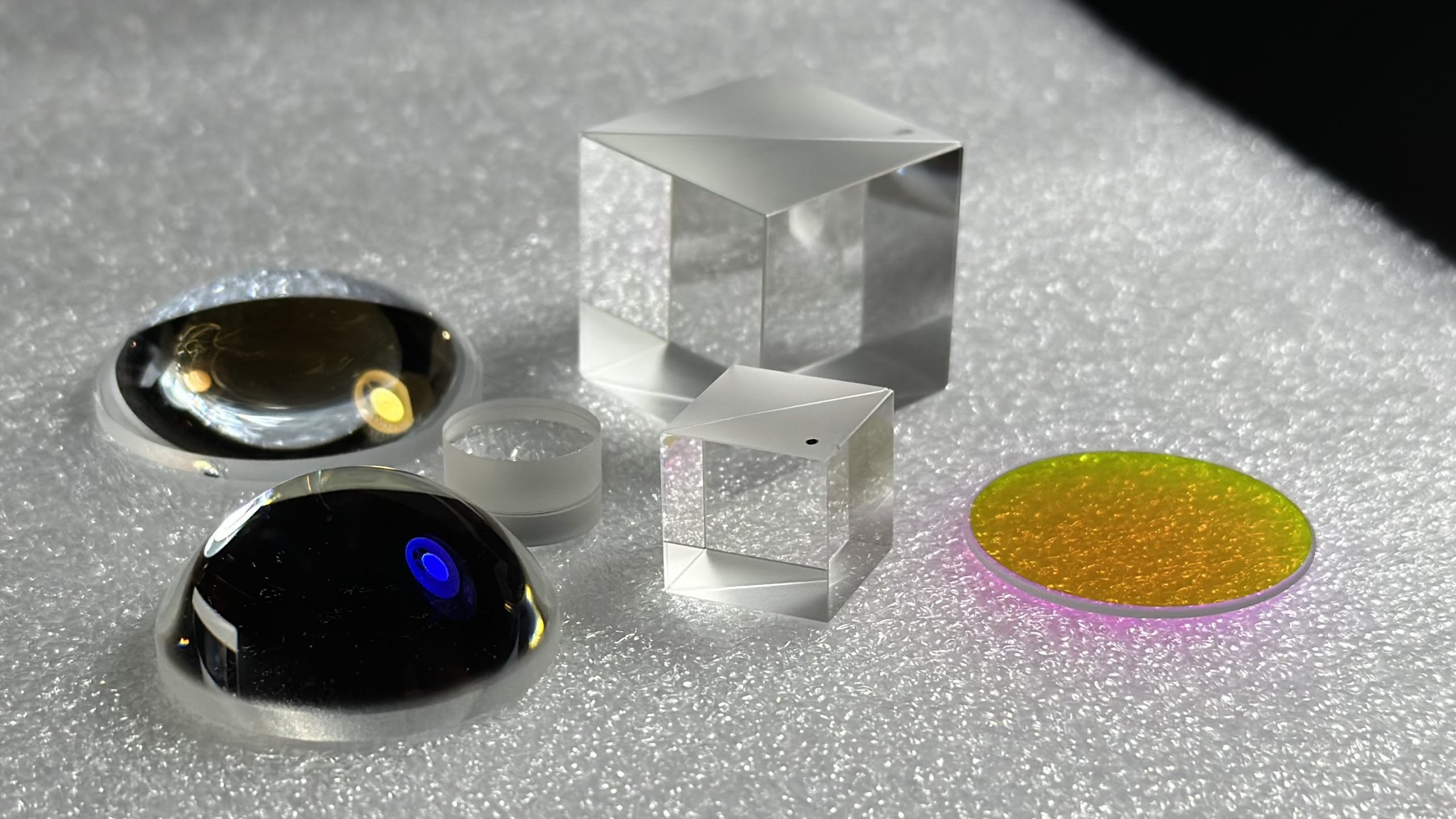 As antireflection films also increase light transmission while preventing light reflection, similar films are applied to the surfaces of camera lenses, which need to let in as much light as possible, and to car windshields, which prevent reflections and ensure sufficient visibility while driving.
Other types of optical thin films are “bandpass filters,” which are optical thin films that pass only certain wavelengths of light and are used for infrared sensors, and “dichroic mirrors,” which separate light into two specific wavelengths and are used for projectors. Even though optical thin films are not visible to the eye, they are used in most situations where “light needs to be controlled.”
 Optical thin films produced by CBC Optics are of course used in all kinds of areas as well. In a recent case, products to which vapor deposition had been applied by CBC Optics were used in the large projector for projection mapping at the opening ceremony of a global event held in Japan in 2021.
Functions and roles required of optical thin films used in large projectors differ from those used in ordinary-sized projectors. It is necessary to design optical thin films for their intended applications, such as controlling light and color more precisely so that beautiful colors can be reproduced, as well as preventing degradation of the substrate and deposition film even if it is continuously exposed to intense light.
The main role of CBC Optics is to design optical thin films that suit such applications and purposes and apply the vapor deposition process to the target substrates (lenses, glass and metal materials).
Vacuum Deposition Process for Maintaining Higher Quality
CBC Optics uses a method called “vapor deposition” to process optical thin films. In this processing method, materials (chemicals such as oxides and metals) are evaporated at the bottom of the substrate on which the thin film is to be applied and adhered to the surface.
According to the engineers, “it is like water droplets forming on the back of a lid when you put a lid on a pot of boiling water. In this case, the lid of the pot is the “substrate,” the water and vapor are the “thin film materials” and the water droplets on the back of the lid are the “deposited thin film.” Just like evaporated water forming water droplets on the back of the lid, the evaporated thin film material becomes an optical thin film on the surface of the substrate.
The function and properties of the optical thin film that is formed depend on the type of thin film material and how it is evaporated. In cases where complex functions are required, such as when used in precision equipment, as many as 100 layers of thin film may be formed on a substrate.

Now, how exactly is the vapor deposition process performed? At CBC Optics, products are processed and shipped by going through four major processes: “designing of the thin film,” “cleaning of the substrate,” “vapor deposition” and “inspection.”
“Designing of the thin film” is the process of defining the function and role of the thin film in accordance with its purpose and requirements based on consultation with the customer. In this process, the function and structure of the optical thin film, the chemicals to be used and its processing method are determined through many discussions.
The next step is the “cleaning” of the substrate to which vapor deposition will be applied. Since the vapor deposition process is performed in fine units of “one millionth of a millimeter,” the substrate must be carefully cleaned to ensure that there are no fingerprints or dust on the surface
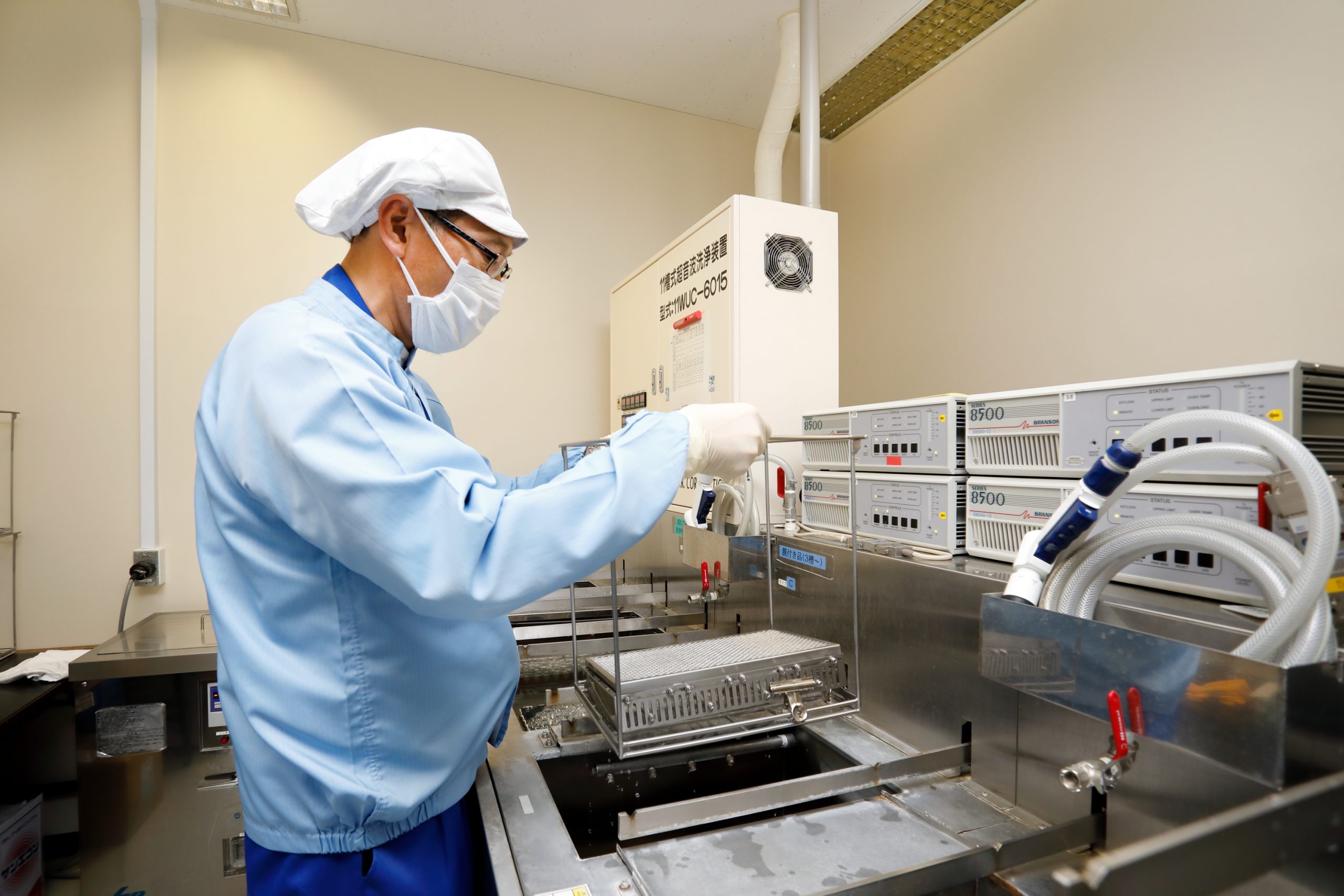 While ultrasonic cleaners are typically used, substrates are “hand-wiped” when they are too large to fit into the cleaner. Polishing delicate materials uniformly is a very difficult task that can only be performed by experienced engineers within the company.
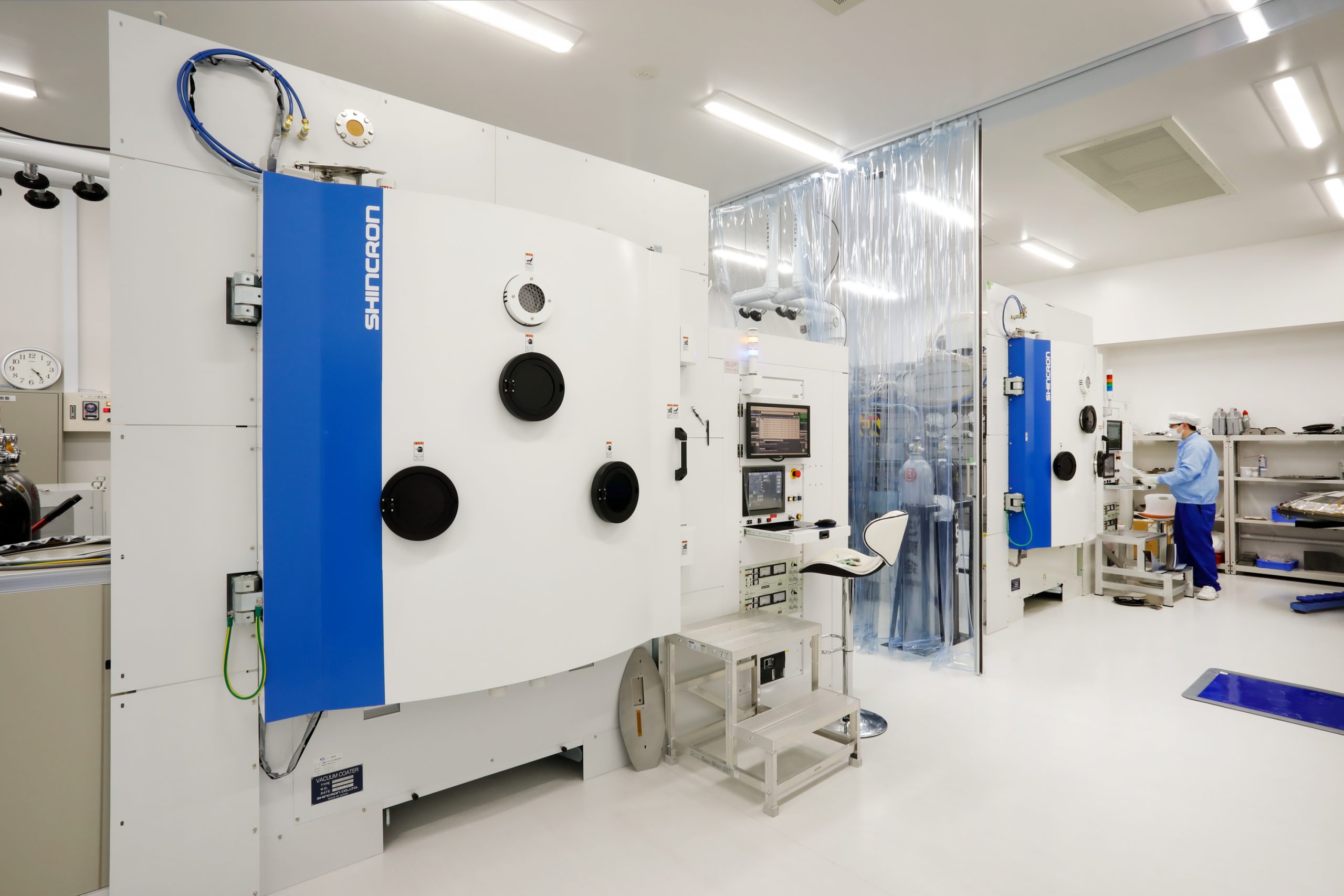 The substrate that has been cleaned and polished finally enters the “vapor deposition” process. The equipment used here is a vacuum evaporator that is approximately two meters high. Since vapor deposition on substrates cannot be performed cleanly in air, the vapor deposition process is carried out by creating a vacuum inside the equipment.
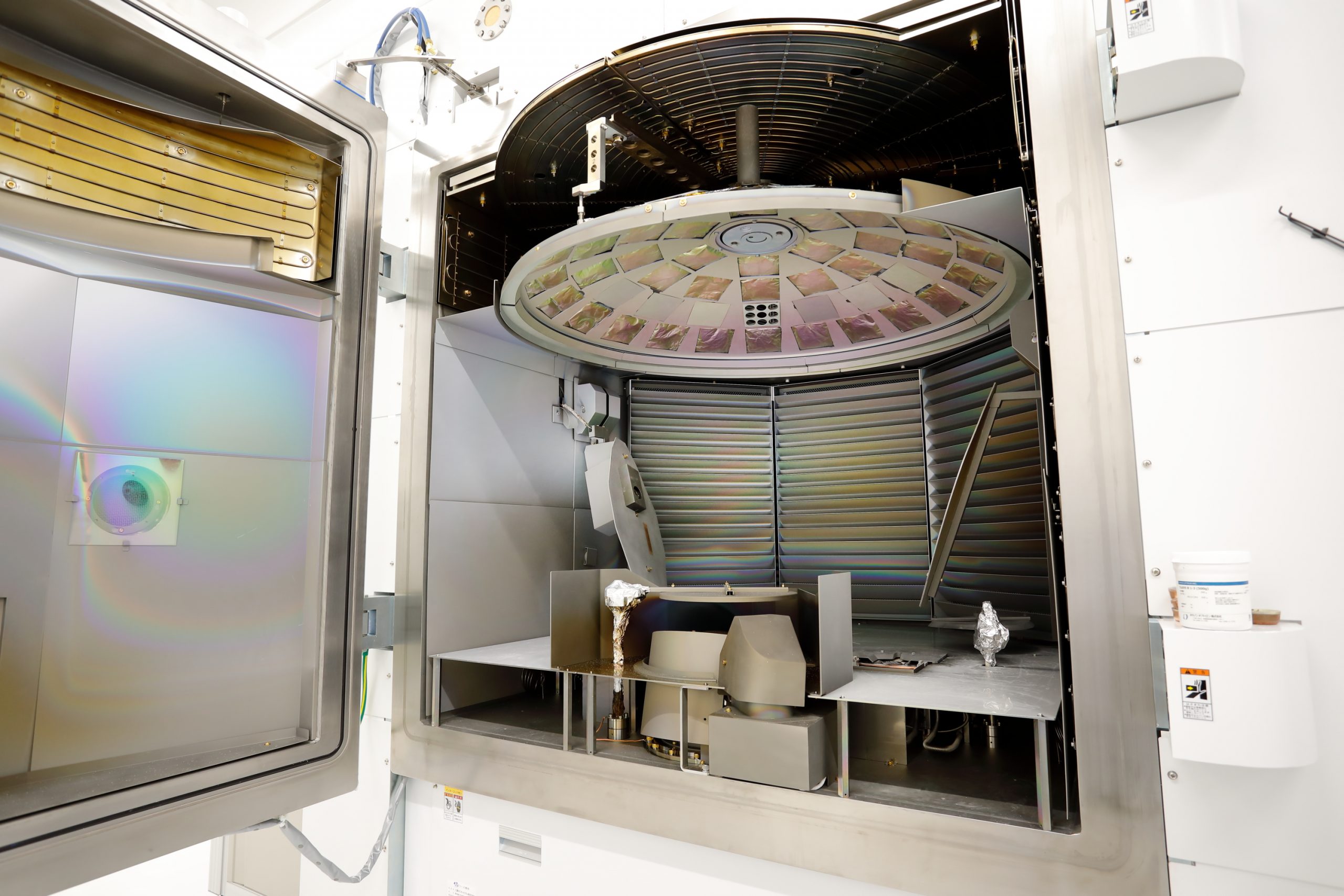 The assistance of engineers may be required in more difficult tasks such as placing a plate called a “correction plate” between the thin film material and the substrate or adjusting the degree of chemical dissolution in order to minimize variations in the thickness and quality of the finished thin film.
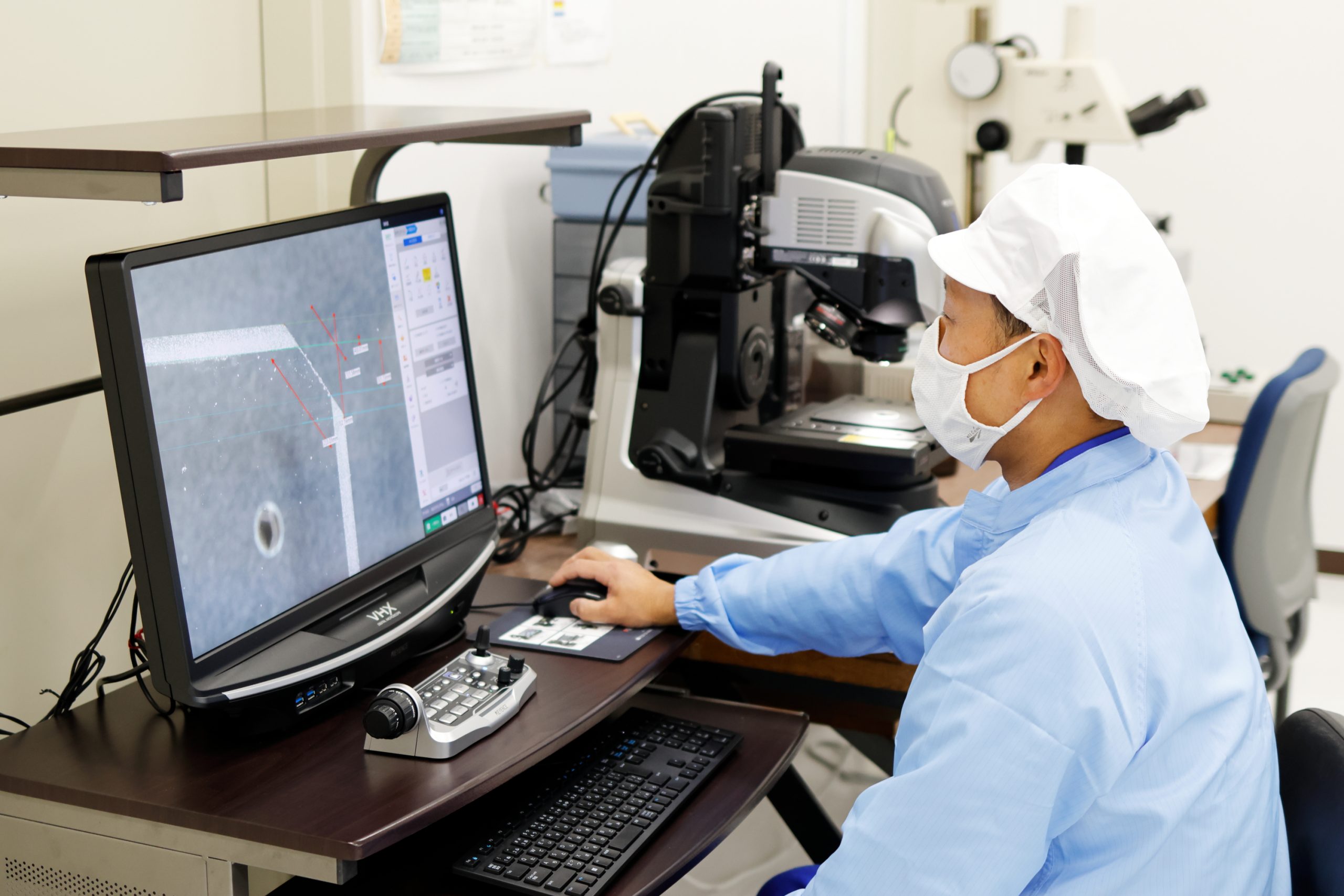 The final process is the “shipment inspection,” where the substrate is inspected after vapor deposition, in accordance with the inspection standards called “MIL standards.” This is an indispensable process for maintaining a high level of quality for CBC Optics’ products. “Microscope and visual inspections” are the methods that are mainly used. All products shipped from the company are subject to this inspection, and as many as 30,000 substrates are inspected each month.
Adding Value to Thin Films to Deliver Products with Higher Quality
Optical thin films are already used in many places but demand is increasing in new areas along with social changes and technological development.
Demand is particularly increasing in areas such as “lasers” and “semiconductor manufacturing equipment.” While lasers are already being used in medical equipment and sensors, the laser market is expected to expand further with the growing demand for processing machines used for manufacturing precision equipment.
Also, when handling semiconductors with higher integration, the manufacturing equipment must also be of high quality to enable fine processing. Lasers and high-quality optical equipment are indispensable for manufacturing equipment such as “exposure devices for printing electronic circuits on the wafer surface” and “position sensors for maintaining positional accuracy.” Optical thin films that support light control behind the scenes play a major role here as well.
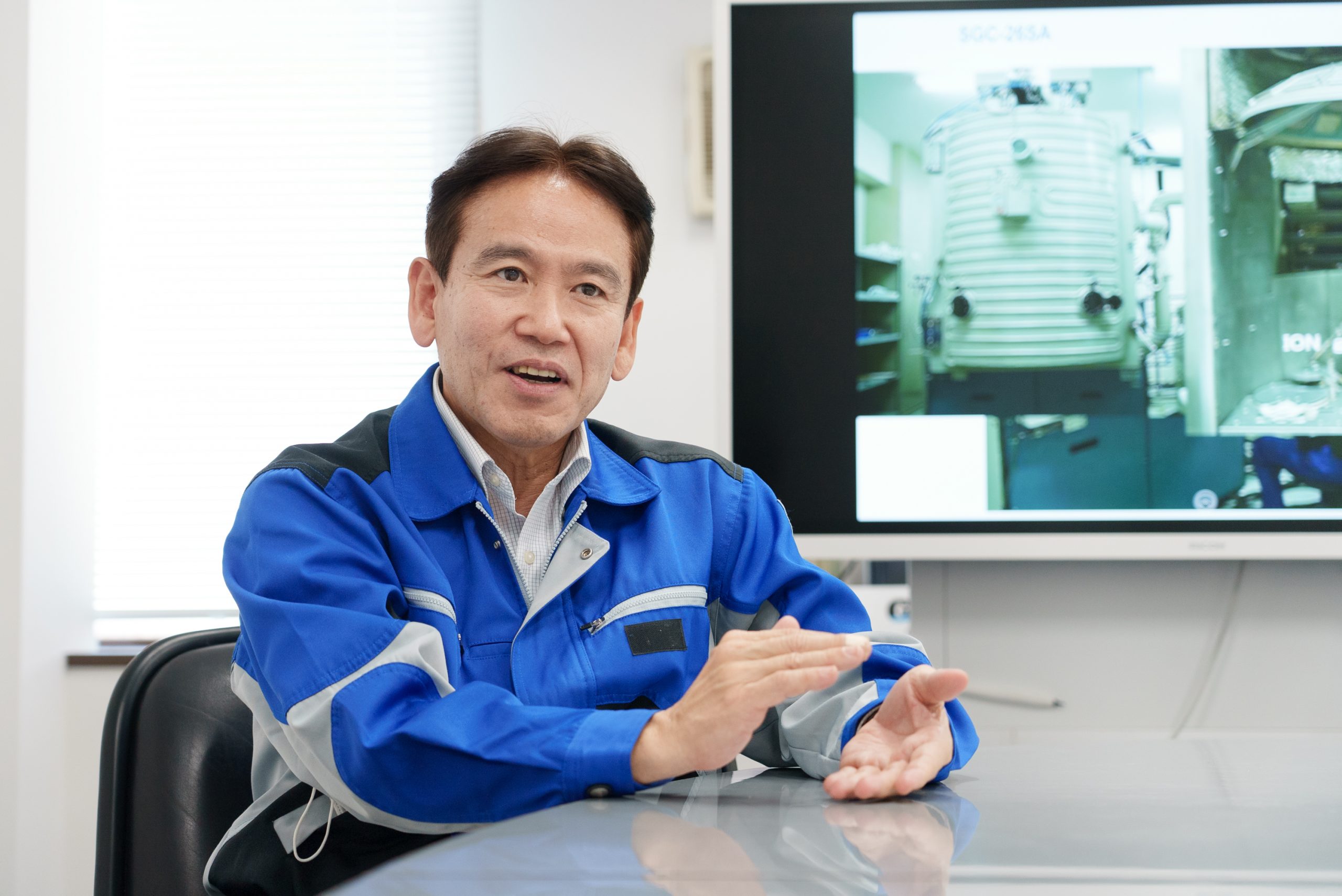
Currently, CBC Optics is also working on the “unitization of manufacturing and processing.”
CBC Optics, which has been handling mainly vapor deposition processing until now, has been outsourcing other processes such as “polishing” and “bonding” to outside contractors. However, the company is now working to become a one-stop provider of all vapor deposition processes by being able to carry out all the work processes surrounding vapor deposition in-house as well. The project is underway with a team to unitize these processes already being set up within the company.
In vapor deposition processing, there are many work processes that can be automated by machines such as vacuum deposition equipment and systems. Precisely because the equipment allows for high-precision processing, technology and know-how that cannot be replaced by machines has to be accumulated and challenges have to be taken on to go into areas that require more difficult processing. It is also necessary to enhance the added value of products by increasing the number of things that the company can provide to customers.
In what way can CBC Optics share the value of the processing technology for optical thin films it has cultivated over the years with the world? The entire company is in the midst of exploring the way to do this.
Synergies Created with CBC Group through Group Participation
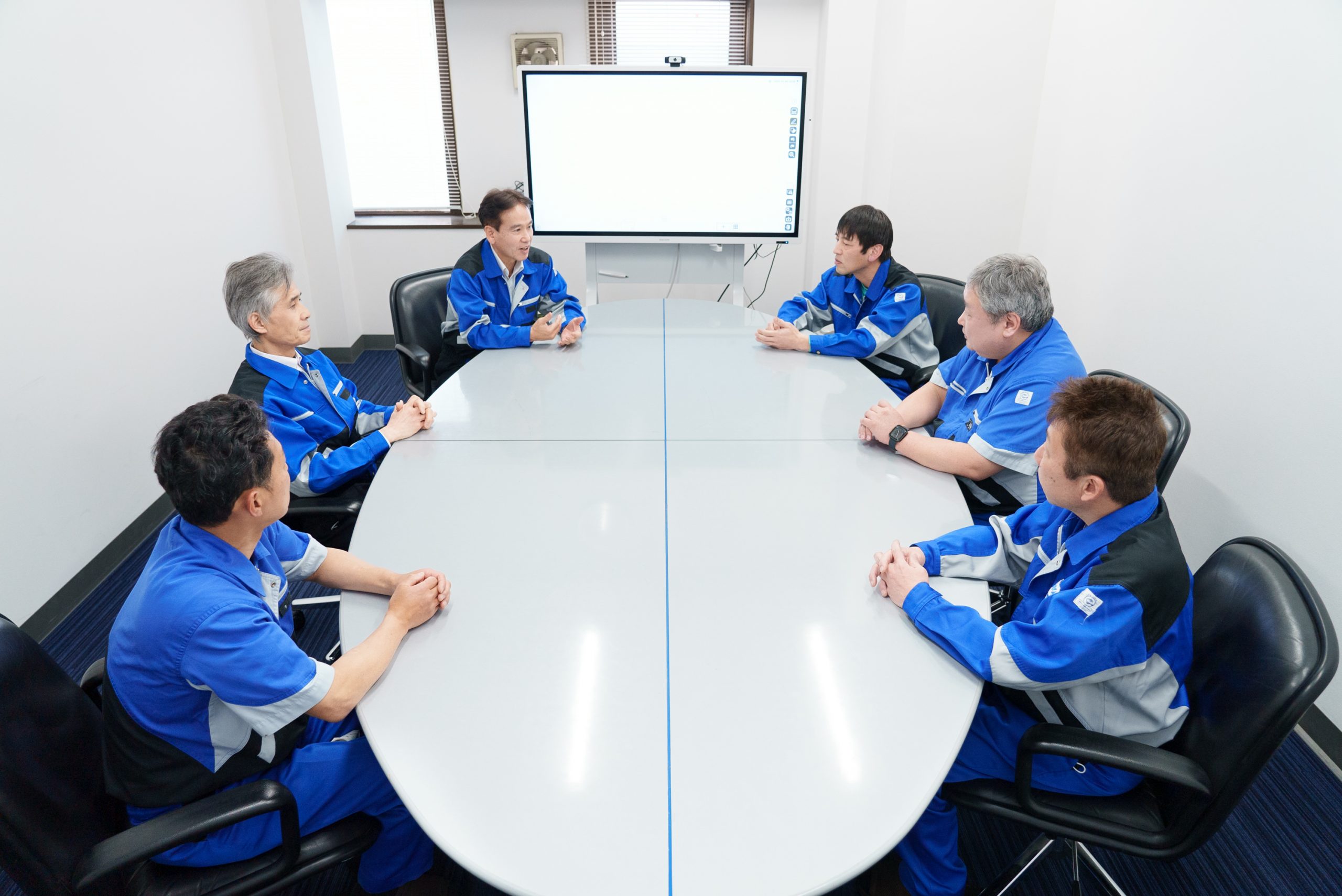 CBC Optics became a member of the CBC Group in 2005. Becoming part of CBC has had a significant effect on its history, which began in 1995.
Though CBC Group is a trading company, it handles a wide range of products such as chemicals, pharmaceuticals and synthetic resins, and also serves as a manufacturing company. It is therefore constantly receiving inquiries about various manufacturing and processing matters regardless of genre. However, as the group did not have sufficient know-how regarding optical thin films and vapor deposition technology, this was an area in which it had not been able to get involved.
After CBC Optics became a member of the CBC Group, it began to participate in all of the group's projects as an “optical thin film professional.” CBC Optics now has many opportunities to participate in ongoing projects not only in Japan but also overseas, enabling it to significantly expand the range of projects and production it handles.
We Want to Find Demand and Deliver Optical Thin Films to More Areas
Since February this year (2023), CBC Optics has been gradually resuming its attempt to “develop demand for optical thin films overseas,” which had been suspended due to the impact of the COVID-19 pandemic.
Examples include tackling energy issues by sterilizing water and air and improving the efficiency of solar power generation. There are still many roles that optical thin films can play in initiatives aimed at a sustainable society.
What impressed me the most in the interview was the words, “There will always be demand for optical thin films where light needs to be controlled.” CBC Optics will continue to work hand in hand with CBC Group to deliver the company's technology to many situations and places where “light” is involved.
Text by Shun Ito / Edited by No-oto