







- 目次
-
In recent years, “biopharmaceuticals” have been growing in prominence in the treatment of cancer, autoimmune diseases, and other conditions. Because their manufacturing processes differ greatly from those of conventional pharmaceuticals, a defining feature of biopharmaceuticals is that their development and manufacturing require highly advanced technologies and facilities.
Playing a vital role here are “CDMOs” (Contract Development and Manufacturing Organizations), which handle the development and manufacturing of pharmaceuticals on behalf of pharmaceutical companies. CBC partners with CDMOs around the world to provide biopharmaceutical manufacturing services to pharmaceutical companies. This article explores the role CBC plays within the biopharmaceutical ecosystem, the strengths of this business, and its future outlook.
The Rise of Biopharmaceuticals and Why CDMOs Are in Demand
- So what exactly are biopharmaceuticals?
Many of the medicines we see in daily life are made through “chemical synthesis,” which combines multiple compounds. Biopharmaceuticals, on the other hand, are manufactured using an entirely different process: culturing living cells and obtaining raw materials for drugs from them.
A defining characteristic of biopharmaceuticals is that they harness the “inherent power of living organisms” for medical use—something that cannot be achieved through chemical synthesis. While conventional chemically synthesized drugs are called “small-molecule drugs,” biopharmaceuticals are also known as “large-molecule drugs.”
The biggest bottleneck in manufacturing biopharmaceuticals is that handling the cells used as raw materials is an extremely delicate process.
Because biopharmaceutical manufacturing involves cells—living organisms—even the slightest difference in the culture environment, such as water quality and pressure or the shape and rotation speed of the impellers used to agitate the tank, can significantly affect yield and quality. This means that even cells successfully cultured at the drug-discovery stage (lab scale) require an extremely high level of technical skill and know-how to reliably reproduce the same conditions on a large scale and with the stability required for commercial production.

Against this backdrop, “CDMOs (Contract Development and Manufacturing Organizations)” have come to play an increasingly significant role in recent years.
In short, a CDMO is a “powerful external partner for pharmaceutical manufacturing.” Its main role is to take on assignments from pharmaceutical companies and handle everything from developing manufacturing methods through to commercial production. In the past, “CMOs (Contract Manufacturing Organizations),” which handled manufacturing alone, were the norm, but from around 2010, “CDMOs” that also covered development began to emerge, mainly overseas.
Today, there are three main reasons why pharmaceutical companies turn to CDMOs.
The first is to compensate for a lack of manufacturing facilities. While Japanese pharmaceutical companies excel at manufacturing small-molecule drugs, they often struggle to secure the additional facilities needed for biopharmaceutical manufacturing. This creates the option of outsourcing the processes that follow drug discovery to an external CDMO that has the necessary functions and cutting-edge technology.
The second reason is to concentrate the company’s own resources on “drug discovery.” Covering everything from development through to production in-house requires enormous human and financial resources. By outsourcing part of the manufacturing and development process, companies can direct their limited resources toward their core business: research and development of new drugs.
The second reason is to concentrate the company’s own resources on “drug discovery.” Covering everything from development through to production in-house requires enormous human and financial resources. By outsourcing part of the manufacturing and development process, companies can direct their limited resources toward their core business: research and development of new drugs.
The true value of CDMOs was demonstrated on a global scale during the development and production of vaccines in response to the COVID-19 pandemic.
Mabion, a Polish CDMO in which CBC has an equity stake, received a technology transfer from Novavax of the United States and took charge of vaccine manufacturing. With the pharmaceutical company focusing on drug discovery and the CDMO taking on mass production, this kind of collaboration made it possible to supply vaccines at the extraordinary speed required during the pandemic.
In order to deliver the medicines the world needs exactly when they are needed, the value of CDMOs working in partnership with pharmaceutical companies has never been higher.
The Trading Company as the “Command Center” Connecting Technology and Business
What role does a trading company play in the pharmaceutical manufacturing process that brings together pharmaceutical companies and CDMOs? A representative involved in CBC’s biopharmaceutical business describes its essence as “connecting the two parties and managing the project as a whole.”
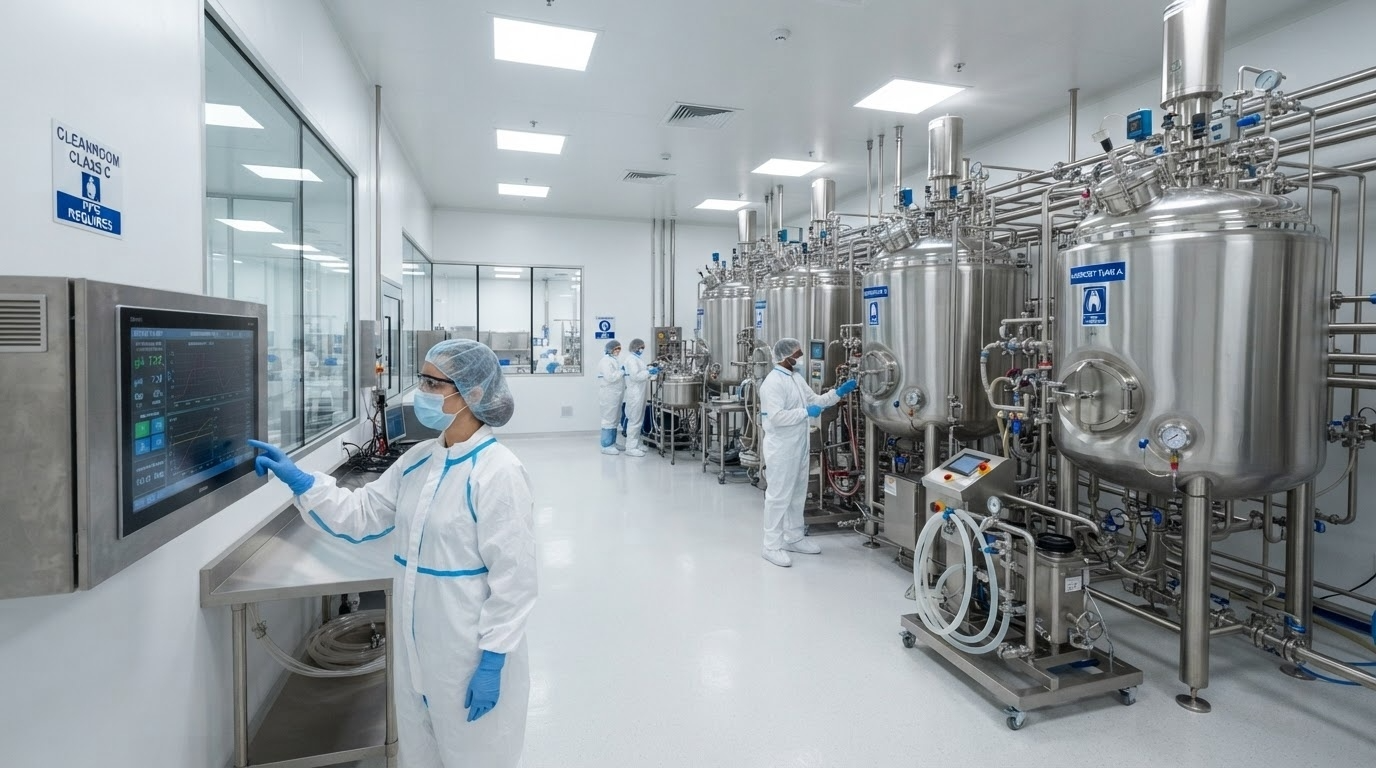
The first step in a joint project is selecting the CDMO that will become the pharmaceutical company’s partner. CDMOs chosen as partners must meet countless requirements, including not only stable quality but also cost management and development schedules. Even more important than these, however, is said to be “the CDMO’s trustworthiness as a partner.”
For a pharmaceutical company, a new drug candidate created after years of hard work is, in a sense, like “one’s own child.” The recipe for manufacturing it becomes some of the company’s most valuable confidential information. The handling of this information requires extreme care, and many pharmaceutical companies hesitate to disclose it to outside partners. Building a strong partnership that allows them to entrust their precious “child” with confidence is a fundamental precondition.
Once a partner is decided and the manufacturing process begins, the next steps involve procuring the cells and raw materials that form the basis of the pharmaceutical, along with arranging transportation under special conditions. By having a trading company with specialized expertise handle practical matters such as import/export and settlement, communication runs more smoothly and the burden on the pharmaceutical company is greatly reduced.
The overseas CDMOs that become partners also gain major benefits from the trading company’s involvement.
From the perspective of overseas CDMOs, Japan’s pharmaceutical market is often described as “closed and conservative.” Having a trading company that understands Japanese business culture and customs act as an intermediary gives overseas CDMOs a major foothold for entering the highly regulated Japanese market.
A CBC representative describes this work as playing “a role as a ‘command center’ connecting technology and business.” The representative says there is a sense of standing at the center of all the stakeholders involved—pharmaceutical companies as customers, overseas CDMOs as suppliers, as well as the company’s own legal and logistics departments—overseeing the whole picture and driving the entire project forward without leaning too far toward either technology or business.
“Being able to connect with pharmaceutical companies and CDMOs around the world from one’s desk and serve as the command center driving projects forward”—this, precisely, is the greatest value a trading company can provide as an intermediary, and it is also what makes this job so rewarding.

Rolling Up Our Sleeves for Customers With “First-Hand Information and Footwork”
CBC demonstrates three major strengths in its biopharmaceutical manufacturing business, which is built around collaboration between domestic pharmaceutical companies and overseas CDMOs.
The first strength is its abundant “first-hand information” about the CDMOs that become partners in manufacturing projects. CBC representatives have personally visited and inspected every overseas CDMO that CBC proposes to pharmaceutical companies.
During these visits, CBC staff speak directly with local personnel and carefully check the operating status of the facilities and the atmosphere on site. For facility-related matters, they also bring specialist consultants along to conduct rigorous checks, gathering real, on-the-ground information such as “is there spare capacity in current operations?” and “is the company genuinely enthusiastic about doing business with Japanese firms?”
Because CBC possesses first-hand, on-the-ground information that cannot be gleaned from online sources or catalog specifications alone, it can propose the optimal partner to pharmaceutical companies with absolute confidence.
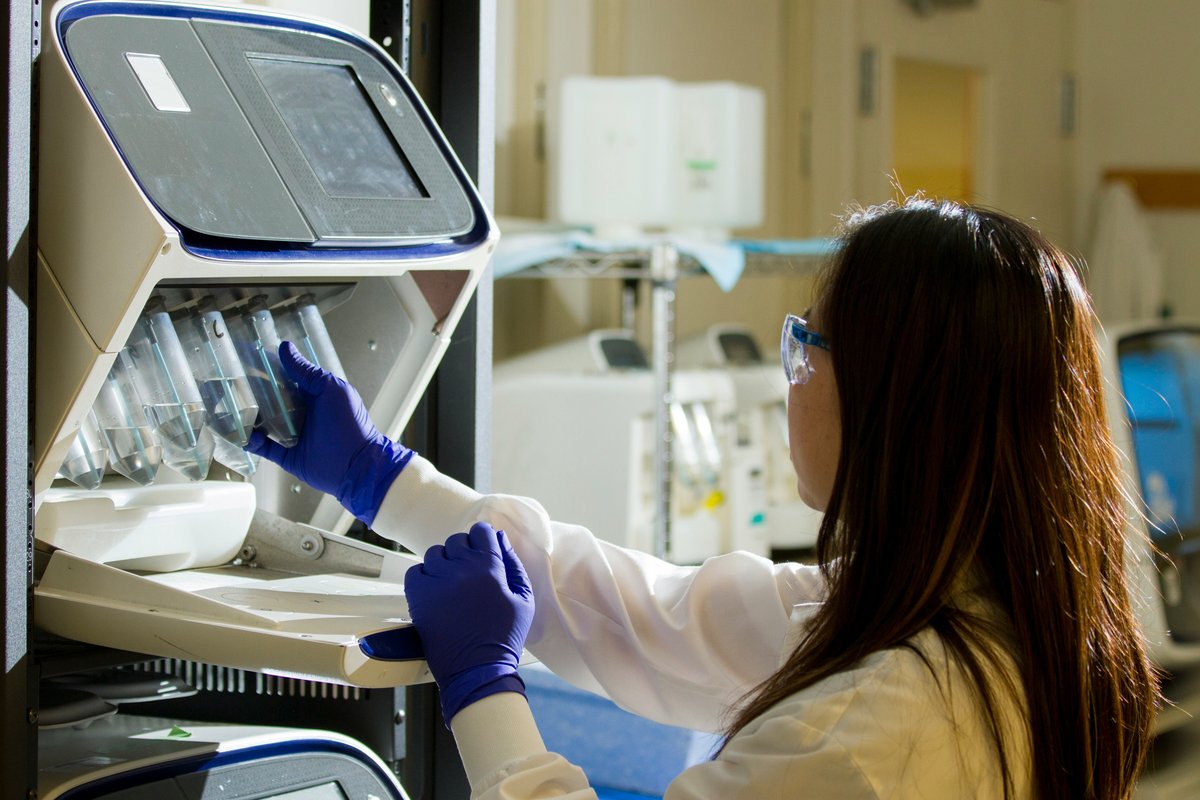
The second strength is having its own “manufacturing functions and quality control system.” CBC operates warehouses and analysis centers in Japan that comply with GMP (Good Manufacturing Practice) standards, giving it a system capable of providing thorough quality assurance services even for overseas products.
CBC also has PROCOS, an Italian CDMO that manufactures small-molecule drugs, as part of its group—another major feature that sets it apart from a typical trading company, as CBC itself has manufacturing capabilities. In addition, CBC has built strong partnerships through equity investments in cutting-edge CDMOs such as TBMC in Taiwan and Mabion in Poland.
Having its own manufacturing functions and strong ties with leading CDMOs also sends a powerful message to the outside world, demonstrating CBC’s “serious commitment to the biopharmaceutical business.” These relationships allow CBC to obtain “on-the-ground information”—the latest global trends The final strength is “overwhelming footwork,” something only a trading company can offer. In pharmaceutical manufacturing projects involving overseas CDMOs, situations often arise that require cross-border troubleshooting or urgent on-site inspections.
A representative from the biopharmaceutical business describes CBC’s strength as “being able to rush to the site immediately, even in sudden situations such as being asked to fly to Europe to deal with a problem and check things out in person.”
For large corporations bound by strict budget controls and procedures, this kind of agile, flexible response would be difficult to achieve. It is precisely this hands-on, no-nonsense attitude— putting in the hard work for pharmaceutical company customers and quickly heading to the site when needed—that builds solid trust in CBC.
Becoming the Partner Customers Think of First Through CBC’s Value as an Intermediary
Looking ahead in its biopharmaceutical business, one of CBC’s medium- to long-term goals is to have a second “biopharmaceutical contract manufacturing company wholly owned by CBC,” following PROCOS in Italy.
The main objective of this initiative is to handle numerous pharmaceutical manufacturing projects in-house, accumulate more advanced know-how within the company, and use the new contract manufacturing company as a springboard for generating further business opportunities.
Another goal is “expansion into new treatment modalities.” The biopharmaceuticals CBC currently handles are primarily “antibody drugs,” but in order to establish a stronger presence across the biopharmaceutical field as a whole, CBC is planning to expand in the future into the field of “regenerative medicine,” including cell therapy and gene therapy.
Another goal is “expansion into new treatment modalities.” The biopharmaceuticals CBC currently handles are primarily “antibody drugs,” but in order to establish a stronger presence across the biopharmaceutical field as a whole, CBC is planning to expand in the future into the field of “regenerative medicine,” including cell therapy and gene therapy.
Speaking about the members working on the front lines who will carry this forward, the representative shared a vision for developing talent: “I want them to become trading company professionals with the real ability to succeed anywhere, even without the company’s name behind them.” By strengthening both technical expertise and business skills at the individual and organizational level, CBC will continue to promote business activities that provide customers with genuine satisfaction and peace of mind.
Written by Ai Sugimoto/Interviewed and edited by Shun Ito (Note)