




- 目次
-
Have you ever heard the term “CDMO (Contract Development and Manufacturing Organization) ?”
A CDMO is a company that takes on the development and manufacturing of pharmaceuticals on behalf of pharmaceutical companies. In the ever-evolving medical field, CDMOs have become indispensable partners that quietly support pharmaceutical companies in delivering new medicines to patients quickly and safely.
What clients look for in a CDMO is not simply the latest facilities or a massive factory. PROCOS S.p.A. (hereafter, “PROCOS”), based in the northern Italian town of Camerino, has a history spanning more than 80 years and now operates globally as part of the CBC Group.
How has a company specializing in the development and manufacturing of active pharmaceutical ingredients (APIs) and highly potent APIs (HPAPIs) earned such deep trust from the pharmaceutical industry worldwide? In this article, we introduce the initiatives PROCOS is undertaking to support the future of medicine, with a focus on the R&D (research and development) work at its core.
PROCOS’s Foundation and a Corporate Culture Built on “Our Customers’ Success Is Our Success”
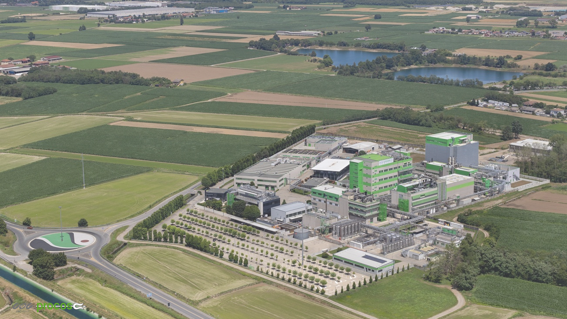
Founded in 1945, PROCOS has grown through decades of continuous investment. Today, it operates more than 50 production lines across a vast 155,000-square-meter site, with a total reactor capacity reaching 630 cubic meters.
Yet PROCOS considers its greatest defining feature to lie not in its scale, but in its “corporate culture.”
 From researchers and engineers to quality control staff and on-site operators, every employee at PROCOS approaches their daily work with a shared sense that their job contributes to a greater purpose.
When a team succeeds, the whole organization benefits; when the company grows, everyone shares in the results. This “shared sense of purpose,” passed down through generations, forms the unshakable foundation that underpins PROCOS’s quality.
This corporate culture also shapes the company’s R&D team, at the forefront of research and development. Guided by the principle that underlies PROCOS’s R&D business—“our customers’ success and our own success are one and the same”—every development project is carried out not as a simple contracted task, but as a “collaboration with the customer.”
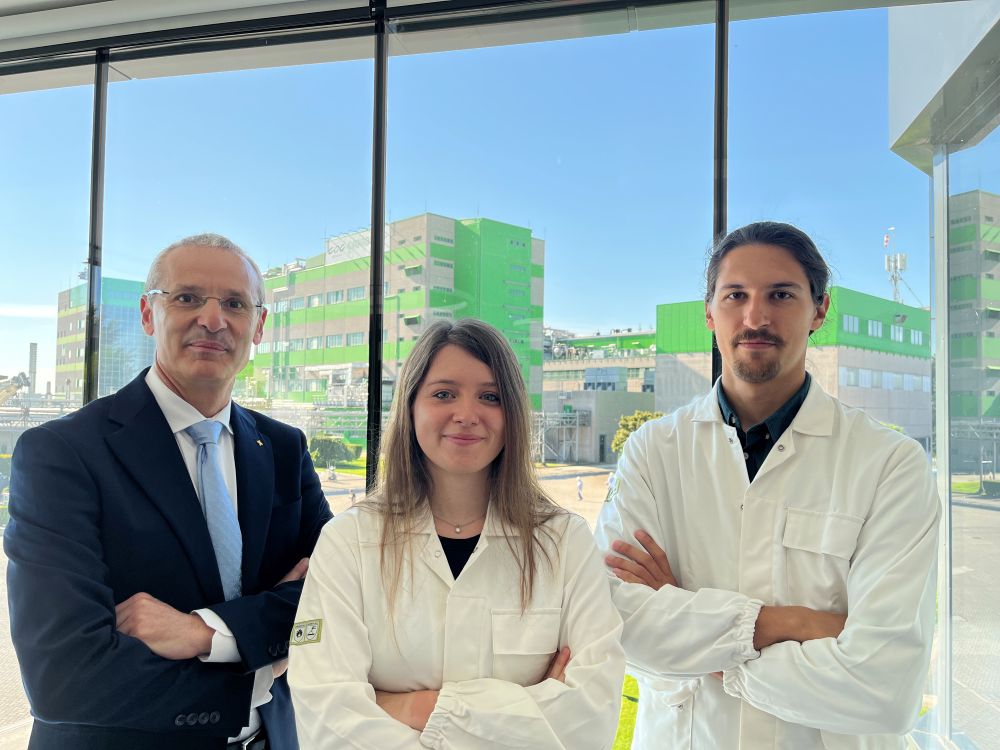
Jacopo Loreto, the company’s R&D Director, describes his vision of an ideal organization as one built on “advanced scientific expertise,” a “relentless focus on results,” “vigorous discussion,” “collaboration,” and a “sincere commitment to improving service.”
This vision is embodied by a powerful R&D team of 60 researchers. More than 15 of them are organic synthesis specialists holding PhDs or postdoctoral qualifications, bringing together outstanding talent educated at top Italian universities and seasoned through experience abroad.
Another notable characteristic is the “youthfulness” of its people. About 80% of the team is under the age of 35, and the energy and fresh ideas of these younger members, combined with the precise guidance and direction of veteran researchers with decades of experience, underpin the company’s strength. This collaboration between young talent and deep experience is the greatest weapon in PROCOS’s R&D organization.
The “Quality by Design” Philosophy: Building In Quality From the Start
One of the most distinctive elements of PROCOS’s approach to quality is the “Quality by Design (QbD)” philosophy that underlies everything the company does.
“Quality by Design” is a leading philosophy and methodology in modern pharmaceutical development, named for its stance of building quality into a product from the design stage, rather than checking for it afterward. At PROCOS, QbD is treated not simply as a matter of regulatory compliance but as the “foundation of all R&D activity,” aimed at guaranteeing a higher, more consistent level of quality.
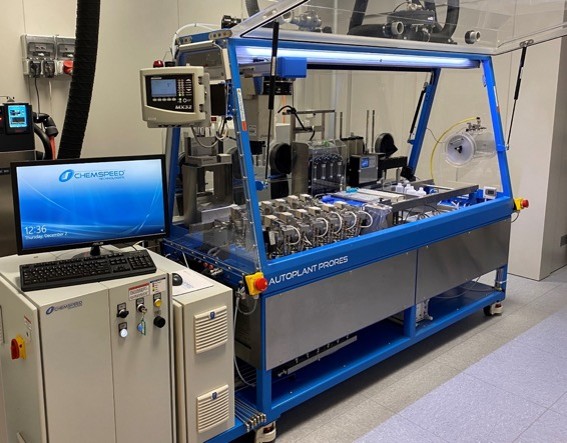
To support this approach, PROCOS invested more than €1 million to introduce the CHEMSPEED robotic automation platform.
This platform enables high-throughput experimentation—testing a vast number of reaction condition combinations to gather large volumes of data quickly—allowing researchers to explore a wide design space in a short period of time. It has made it possible to significantly shorten development timelines, build more robust manufacturing processes, and prepare more thorough regulatory submission documents.
 Technology transfer—scaling up a process established using this kind of cutting-edge technology to an actual production line—is said to be one of the most critical phases in pharmaceutical development. The complexity of the manufacturing process, how raw materials are handled, and differences in the equipment used can all significantly affect the quality of the medicine.
This is where PROCOS’s renowned teamwork comes into play. At the company, the researchers who developed a given process remain involved throughout the technology transfer, working closely with the manufacturing floor and the quality and safety management teams.
PROCOS also keeps its pharmaceutical customers continually informed and, whenever an issue arises, presents a solution immediately. In this way, the relationship goes beyond a simple “contractor and client” arrangement to build genuine trust as true partners.
Within the company, researchers share knowledge across project boundaries, and experienced veterans devote themselves to passing on both technical skills and the organization’s values to younger staff. Individual contributions, in turn, help maximize the results of the team as a whole. This collaborative model at PROCOS resonates strongly with values deeply rooted in Japanese workplace culture.
Although PROCOS is an Italian company, it shares its values with Japan’s CBC Group—a fact that should also give great reassurance to Japanese pharmaceutical companies considering it as a partner.
World-Class Trust, Backed by State-of-the-Art HPAPI Facilities
In recent years, PROCOS has made substantial investments to further improve quality using the latest technology. Among these efforts, the company has continued to expand its dedicated facilities for “HPAPIs (highly potent active pharmaceutical ingredients)” since 2018.
HPAPIs, used in cancer treatments and antibody-drug conjugates (ADCs), are pharmaceutical ingredients that can have a powerful effect on the human body even in extremely small amounts. While effective against disease, they are also highly hazardous substances for the staff who manufacture them—inhaling or coming into contact with even a trace amount of the invisible powder can cause serious harm to one’s health.
For this reason, “containment”—absolutely protecting the lives of workers and the surrounding environment—is one of the most critical challenges in HPAPI manufacturing.
PROCOS’s HPAPI facility is equipped with world-leading containment technology, capable of managing exposure limits down to an extremely low level of “1 nanogram per cubic meter.” This is not simply an over-specified capital investment—it is a reflection of PROCOS’s strong sense of responsibility to protect, without exception, the health and safety of on-site staff and the surrounding environment.
PROCOS also operates four cGMP-certified manufacturing units equipped with specialized technologies such as high-pressure chromatography, nanofiltration, freeze-drying and milling, enabling the development and manufacturing of complex compounds, including cytotoxic anticancer drugs and antibody-drug conjugate (ADC) payloads.

What’s more, trust in PROCOS’s manufacturing quality is already firmly established on a global scale. The company’s facilities have passed numerous inspections by some of the world’s most rigorous regulatory authorities, including the U.S. FDA (Food and Drug Administration), Japan’s PMDA (Pharmaceuticals and Medical Devices Agency), Italy’s AIFA, the European Medicines Agency (EMA), and Health Canada.
This track record of clearing rigorous reviews across multiple regions should provide even greater reassurance to pharmaceutical companies seeking approval for new drugs.
Expanding R&D to Deliver Better Medicines to the World
Rather than resting on its already formidable track record, PROCOS continues to evolve with an eye on the future of medicine.
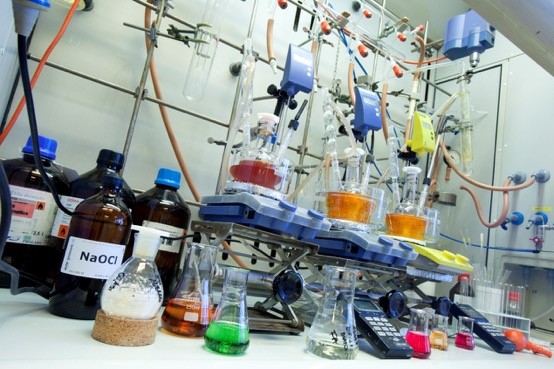
Across the pharmaceutical industry today, demand is rapidly rising for next-generation therapies collectively known as “TIDES,” including synthetic peptides and oligonucleotides (nucleic acid drugs). PROCOS is staying ahead of these industry needs, actively working to develop the infrastructure to support these new treatment modalities from research through to manufacturing.
A major milestone symbolizing this challenge for the future is the construction of a new R&D center, scheduled for completion in 2028. With the launch of this new facility, the team supporting the company’s R&D division is expected to grow to roughly 100 researchers, dramatically expanding its R&D capabilities.
The new R&D center is expected to provide pharmaceutical companies with more advanced scientific capabilities for the development of increasingly complex molecular structures and new treatment methods, bringing both significantly shorter development timelines and access to a broader range of expertise.
And these cutting-edge efforts at PROCOS are also deeply connected to the pharmaceutical industry in Japan, despite the distance between the two countries.
As a wholly owned subsidiary of Japan’s CBC Group, PROCOS shares the same corporate philosophy and medium- to long-term strategic goals as its Japanese parent company. Guided by values rooted in Japanese workplace culture—such as exacting standards for quality and precision and a sincere commitment to continuous improvement—PROCOS is working to deliver value that goes beyond simple “outsourcing to a CDMO” and to strengthen its relationships with Japanese partner companies.
PROCOS’s advanced R&D, substantial capital investment, and highly transparent collaboration with customers are all connected to a single goal: delivering better medicines to patients. Even at this very moment, the active pharmaceutical ingredients shipped from the Camerino plant in Italy are giving hope and supporting treatment for people around the world facing serious illness and life-threatening conditions.
PROCOS is not simply a manufacturer of chemical substances. It is an organization that, through science and technology, relentless innovation, and the passion of every individual employee, builds the very “foundation” of safe, high-quality medicines.
With continuous investment, ever-expanding scientific capabilities, and a clear long-term vision, PROCOS’s story will undoubtedly continue to be written with some of the most important chapters yet to come in saving people’s lives.
Edited by Shun Ito (Note)